Moringa Seeds
Category: Garden
SKU: CS-FDD577AF493EE0D4
Key Specifications
From product details- Latin Name
- Moringa oleifera
- Hardiness Zone
- Perennial 10-11
- Days to Maturity
- 160-170
- Days to Germination
- 3-14
- Seeding Depth
- 1 inch
- Plant Spacing
- 4-6 inch
- Row Spacing
- 3 feet
- Plant Height
- 25-35 feet
Product Details & Specifications
Moringa Seeds — Non-GMO, Perennial, Deciduous Softwood Tree Moringa is also known as the Drumstick Tree, Horseradish Tree, and Ben Oil Tree It is enjoyed in the landscape for its fragrant white raceme blooms in the spring as a specimen planting, or a tall hedge Because of its medicinal use, Moringa has also been labeled a “m…
160-170 Days to maturity. Moringa oleifera. Moringa Seeds. Non-GMO, Perennial, Deciduous Softwood Tree. Moringa is also known as the Drumstick Tree, Horseradish Tree, and Ben Oil Tree.
It is enjoyed in the landscape for its fragrant white raceme blooms in the spring as a specimen planting, or a tall hedge. Because of its medicinal use, Moringa has also been labeled a “miracle tree” having antifungal, antiviral, antidepressant, and anti-inflammatory properties.
We recommend doing your own research regarding medical applications before use. Readily propagates from cuttings, or from seed for beautiful heat (up to 118°F in shade), and drought-tolerant tropical plants.
Approx 85 seeds/oz.
Download Free Vegetable Growing Guide PDF
Latin Name: Moringa oleifera
Hardiness Zone: Perennial 10-11
Days to Maturity:160-170
Days to Germination: 3-14
Seeding Depth: 1 inch
Plant Spacing: 4-6 inch
Row Spacing: 3 feet
Plant Height: 25-35 feet
Plant Width: 15-25 feet
Growth Habit: Softwood, fast-growing tree with a long taproot
Soil Preference: Well-draining, moist but not wet sandy loam, with a neutral-acidic pH.
Temperature Preference: 77-95 °F
Light Preference: Full Sun
Pests and Diseases: Moringa is sensitive to root rot when soils are too wet, prevent by watering deeply but infrequently. Watch for common pests like cutworms, aphids, termites, and armyworms.
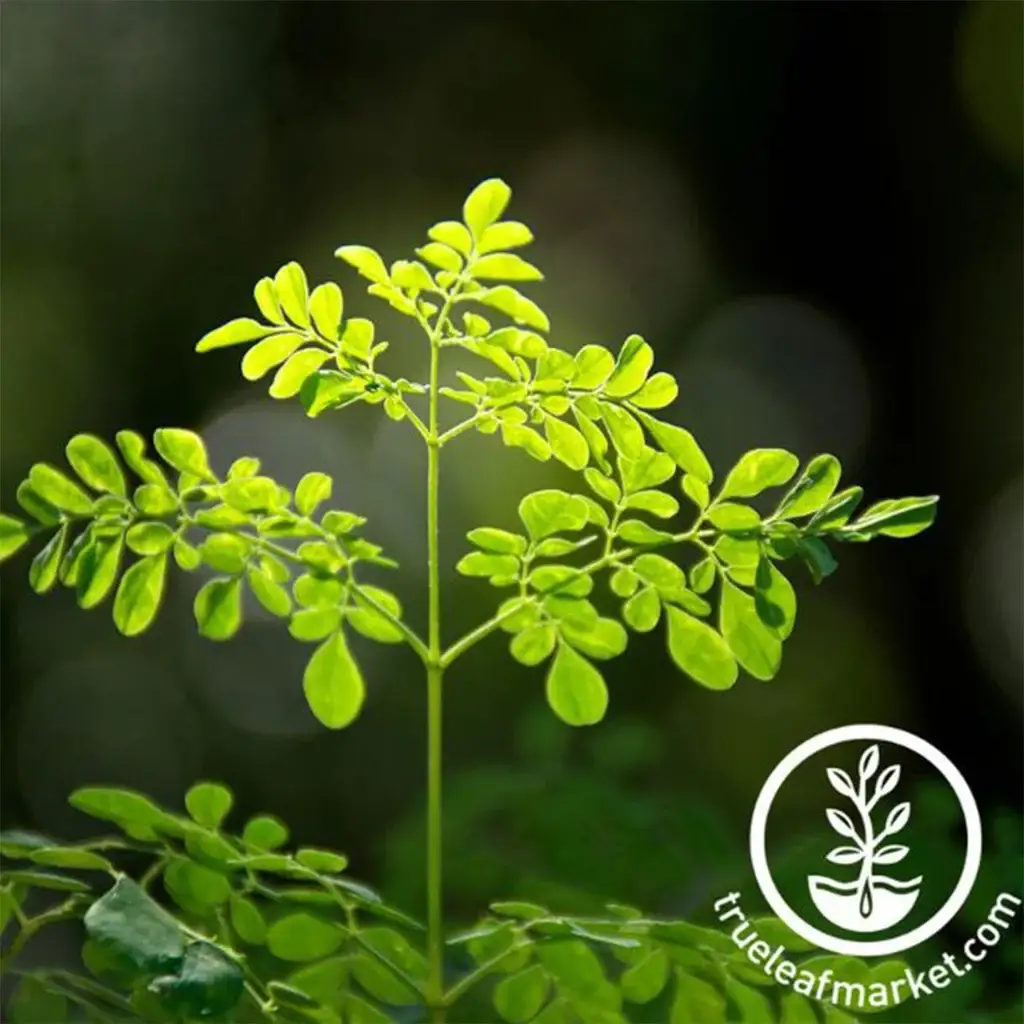
Moringa Color: Pale gray bark with green leaves, white fragrant raceme flowers, and long brown seed capsules.
Moringa Flavor: Bitter, but sweet Matcha-like flavor with hints of spirulina. The leaves offer more of a spicey kick similar to horseradish.
Growing Non-GMO Moringa Seeds and Cuttings When growing Moringa from seed start by soaking the seed overnight for up to 24 hours to prepare the seeds for germination. Then place them in a bag to preserve moisture until the seed sprouts.
Applying bottom heat can help speed up the time it takes to germinate. Typically it takes 3-14 days for germination to occur. You can plant your seeds directly after they are harvested as they have no dormancy period.
Plant your seeds 1” deep into the soil. Keep your soil moist, but not wet as Moringa does not like wet “feet”. We recommend growing in sandy loam to prevent water draining issues.
If starting your seeds indoors transplant when the roots are well established, there are several leaves, and the temperature is steadily above 75 °F. Harden off by allowing your seedling to sit outside each day for an hour or two.
Increase the amount of time it is outside until it can handle the stress. If you are growing Moringa to harvest its leaves we recommend growing in rows. Plant your seeds 4-6” apart with your rows being about 3 feet apart. This should allow you enough space for harvesting leaves throughout the season.
Keep in mind you will want to prune your plants to keep more of a hedge-like shape for easy harvesting rather than a tree form. You can also top these plants for a bushier growth habit.
Their natural habit will form a tree that is 25-35’ tall and 15-25’ wide under optimal growing conditions. In addition to starting your Moringa plants from seed, you can start them from a cutting and see their blooms within 8 months. To propagate by cuttings decide if you will start them outdoors or inside.
If you will be starting them outside, cut a 1” diameter twig that is at least 6’ long. Plant 3’ deep for a strong root system to develop quickly. If starting indoors, take a cutting of a ¼-½” in circumference branch that is only 8-12” long.
We recommend dipping your cuttings into a rooting hormone to stimulate quick root development. Pot in a container that is at least 20” or bigger. Keep your cuttings in a shaded area or greenhouse location with light.
After 2-3 weeks your plants should be rooted and ready to be hardened off before outdoor planting. Moringa in the Vegetable Garden Moringa is used as both a cropping and landscaping plant, depending on where it is grown. Traditionally, it has been grown for its leaves, roots, and young pods.
We recommend doing your own research before consuming. Use varies widely by different cultures. When it comes to its use in home gardens, it is known to do well with Basil, Pole Beans, and Sweet Potatoes.
Because of its fast-growing habit, you can use this as a warm-season annual allowing this tree to provide some late-summer shade to low-growing vegetables. Moringa as Microgreens Technically, Moringa is extremely difficult and expensive to grow as a true "microgreen", to the point where it is impractical. But it's a case of semantics. Microgreens are typically harvested before true leaves emerge.
Most folks who grow Moringa as a "micro", aren't really harvesting it at the true microgreen stage, but rather as a full-blown seedling with true leaves, but just calling it a microgreen.
Typically growing to when the plant is 4 to 5 inches tall, and then harvesting "microgreen" leaves from it. *Opinions vary on if this plant should be consumed, what parts, and how it may be prepared. We recommend doing your own research before consuming. Moringa is NOT recommended for sprouting. Harvesting Moringa Leaves The leaves of the Moringa plant are the most commonly harvested part of the plant. Once harvested, they can be used for culinary or medicinal purposes. Often, a powder is made from its leaves as a dietary supplement.
Once the tree reaches about 5’ tall you can start collecting the leaves. This is best done in the early morning or late evening hours when there is no dew on the leaves.
Harvesting the leaves while there is still dew on them can lead to rot issues during storage. Rinse the leaves before preparing for culinary use. Remove mature pods from your tree by pulling if they detach readily, or cut them away.
Then cut into green bean-length fragments. Peel the fibrous outer layer away and prepare as you would green beans, or freeze for future use. About Moringa Garden Seeds As a native to northwestern India Moringa has been a staple crop to those living throughout the tropical and subtropical regions of Asia, Africa, South America, and Australia. Moringa has been considered a weed in tropical areas such as northern Australia because its seeds do not require a dormancy period making them readily able to spread.
However, this is not much of a worry for those growing this plant in more temperate regions as these trees do not spread quickly outside of their seed-dropping area.
Without maintenance, a parent tree may grow into dense thickets in tropical areas. In Africa, it is sometimes used as fodder. There are at least 13 species of Moringa but only one, Moringa oleifera, can be cultivated outside of its native environment. Because of its growth habit as a tree, regular pruning is best to encourage leaf production and flowering. Otherwise, it develops tall growth with few leaves and reduced flowering with time. Grows about 10’ per year. Tips From Our Gardeners
"To use the mature version of this plant all year long in hardiness zones under 10, grow in a container that can be moved to an indoor space such as a greenhouse, Pool house, or sunroom."
- Ashleigh Smith, True Leaf Market Managing Editor
Moringa Seeds Per Package:
10 g - Wholesale - Approximately 30 Seeds 1 oz - Wholesale - Approximately 85 Seeds 4 oz - Bulk Seeds - Approximately 340 Seeds 1 lb - Bulk Seeds - Approximately 1360 Seeds 5 lb - Bulk Seeds - Approximately 6800 Seeds
Non-GMO Moringa seeds are available for Fast Free Shipping on orders over $60.
Buyer Reviews (0)
Reviews for this product only.